Global Showcase and Reputation Management: An Analysis of Middle Eastern Sports Diplomacy and "Sportswashing" Through Formula 1
- ZNZeynep Buse Nazlı
Introduction
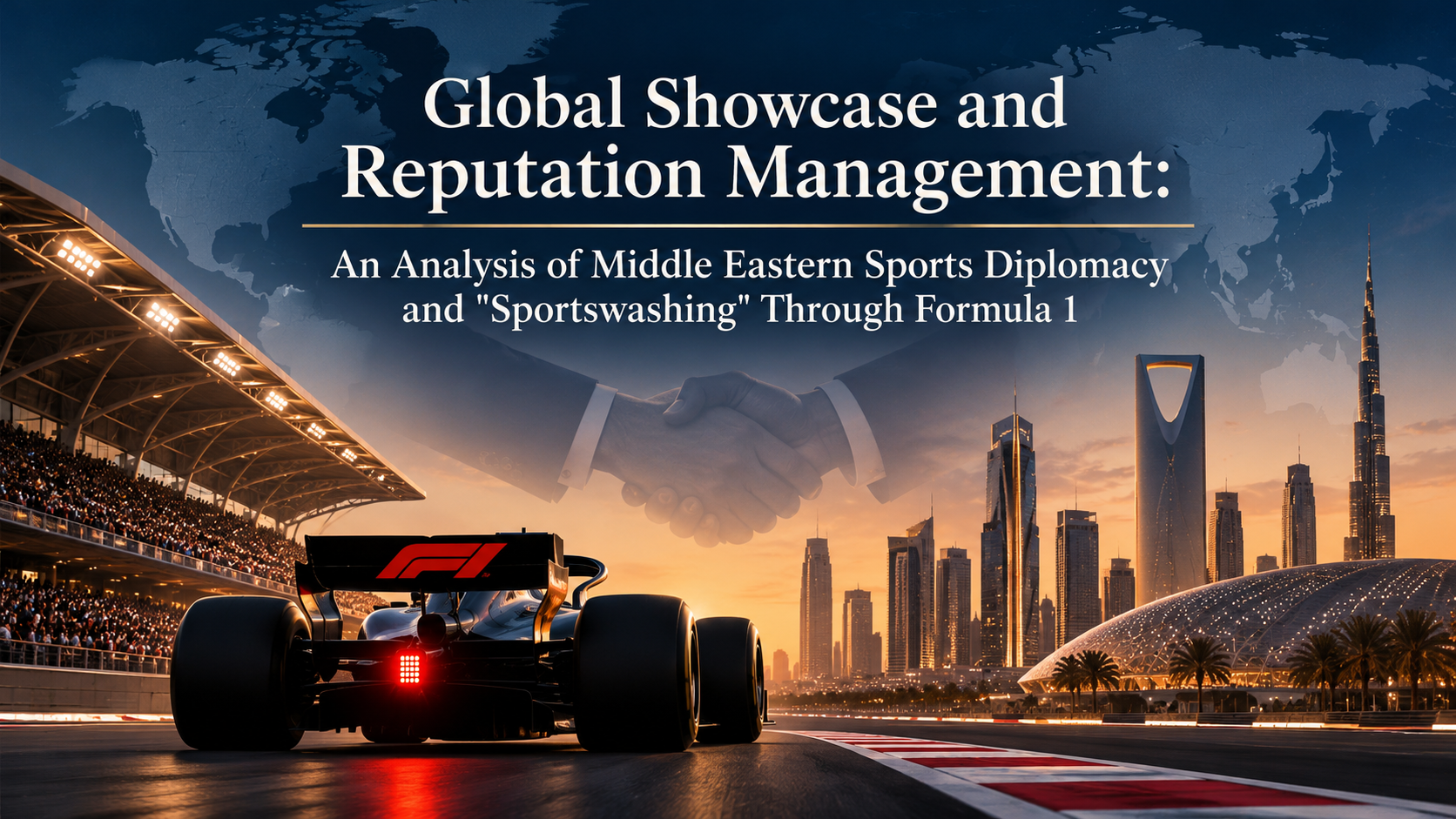
Formula 1 (F1) is one of the most popular sports in the world. Every year, millions of people watch these fast cars on television. In the past, Formula 1 races were mostly in Europe. However, the calendar has changed a lot in recent years. Today, there are 24 races in a season and four of these races take place in the Middle East. These races are in Bahrain, Saudi Arabia, Qatar and the United Arab Emirates (UAE). Hosting a Formula 1 race is very expensive. These countries pay hundreds of millions of dollars every year to Formula 1 management. They also spend billions of dollars to build big race tracks and luxury hotels.
This situation brings up a very important question: Why are these Middle Eastern countries spending so much money on a car race? This analysis paper will answer this question. This paper argues that Middle Eastern investments in Formula 1 are not just about loving sports. These races are strategic tools for politics and business. The Gulf countries use Formula 1 to prepare for a future without oil, to make money from tourism and to build a good image. Furthermore, they use this global sport to hide their human rights problems from the world.
The End of Oil and The Need for New Economies
To understand these F1 investments, we must look at the economy. Countries like Saudi Arabia, Qatar and the UAE are very rich. For many years, they made their money from selling oil and natural gas. However, the world is changing rapidly. Because of global warming and climate change, many countries want to stop using oil. Car companies are making electric cars now. In the future, the world will not buy as much oil from the Middle East.
The leaders of these Gulf countries know this reality. They know that their oil will finish one day. Because of this, they need to find new ways to make money. They need a new economic plan. For example, Saudi Arabia has a very big national plan called "Vision 2030." The main goal of this plan is to make the economy diverse. They do not want to depend only on oil. They want to make money from new technology, international business and luxury tourism.
To achieve this, they need people to visit their countries. They want millions of rich tourists to come for holidays. They want international companies to open offices in their cities. But first, they need to show the world that their countries are safe, modern and fun. This is why they need big global events like Formula 1.
Formula 1 as a Nation Branding Tool
Formula 1 is a perfect advertising tool for the Gulf countries. It is not just a race. It is a global show. Every race weekend, television cameras broadcast the event to more than 200 countries. More than a billion people watch these races every season.
When a country hosts a Formula 1 race, they do not just show the cars. The TV cameras fly over the cities. They show beautiful beaches in Abu Dhabi, tall and shiny buildings in Qatar, and modern roads in Jeddah. A person watching the race from their home in London, Tokyo, or New York sees a very rich and futuristic country. This creates a new "nation brand." It changes the image of the country in people's minds. It tells the world: "We are a modern country and you should visit us."
Additionally, these countries do not just host the races. They also buy power inside the sport. Big state companies from the Middle East are now the biggest sponsors of Formula 1. For instance, Saudi Aramco, the giant national oil company, is a global partner of Formula 1. Aramco also gives millions of dollars to sponsor the Aston Martin racing team. Qatar Airways is another massive sponsor for the sport. By doing this, these countries put their names everywhere. They become impossible to ignore in the global business of sports.
The Dark Side: Human Rights and "Sportswashing"
However, there is a very dark side to this shiny picture. Many people and organizations are very angry about these races. Non-governmental organizations (NGOs) and human rights groups strongly criticize Formula 1 and the Gulf countries. Famous groups like Amnesty International and Human Rights Watch write many reports about this topic.
These human rights groups use a specific word for this situation: "Sportswashing." What does sportswashing mean? It means using sports to wash a dirty image. When a country has a bad reputation, they use the fun and excitement of sports to make people forget the bad things.
According to these organizations, the Gulf countries have many serious problems. First, there is no real freedom of speech. People who criticize the government can go to prison. Second, women's rights are still very limited in some of these countries. Third, and perhaps most importantly, there are massive problems with migrant workers. The beautiful race tracks, the luxury hotels and the big stadiums are built by poor workers from countries like India, Nepal and Bangladesh. Reports show that these workers work in terrible conditions. They work in the extreme heat, they get very little money and they have very few legal rights.
Human rights groups argue that the Gulf leaders use Formula 1 to hide these painful realities. When the world watches the fast cars, the rich celebrities and the fireworks, they forget about the poor workers and the people in prison. The shiny sport acts like a mask.
The Defense: Cultural Exchange and Global Integration
A good analysis must look at both sides of the story. Formula 1 executives and Middle Eastern leaders strongly reject the "sportswashing" claims. They have a very different perspective on this issue.
First, Formula 1 management argues that sports and politics should not mix. They believe that sports should be neutral.They say that if sports organizations only visited countries with perfect human rights, there would be very few places left to race.
Second, both F1 bosses and Gulf leaders argue that bringing global events to the Middle East is actually a good thing for human rights. They call this "cultural exchange." When hundreds of thousands of international fans, journalists, and teams visit a closed country, the country starts to open up. The local people interact with the world. F1 says that this interaction brings Western standards and modern ideas to the region much faster than a political boycott.
The leaders of these countries also say that change takes time. They argue that they are making positive reforms,especially regarding women's rights and worker rights but a society cannot transform in just one day. They ask the international community to focus on their progress rather than only looking at their past mistakes.
Conclusion and Evaluation
In conclusion, the relationship between Formula 1 and the Middle East is a complex story of sports, money and global politics. The Gulf countries are hosting these races to build a new economic future after oil.They use the global power of television and sports sponsorships to build a modern, attractive nation brand.
At the same time, the debate around "sportswashing" will not end soon. Human rights groups will continue to show the world the dark realities behind the shiny race tracks. However, the reality of modern sports is that money talks. Formula 1 needs the massive financial power of the Gulf states to survive and grow. In return, the Gulf states need the global visibility and prestige that Formula 1 provides.
This relationship is a perfect example of modern sports diplomacy. Even if sportswashing does not silence every critic, it achieves its main goal. It successfully makes these Middle Eastern countries rich, powerful and completely unavoidable partners in the global system. As long as the cars keep racing and the money keeps flowing, this strategic partnership will continue to grow.
The opinions expressed in the articles belong to the author(s) and may not reflect the editorial policy of the Center for International Politics, Justice, and Society Studies.